On marathons, mile markers, and what carries people to the finish line.

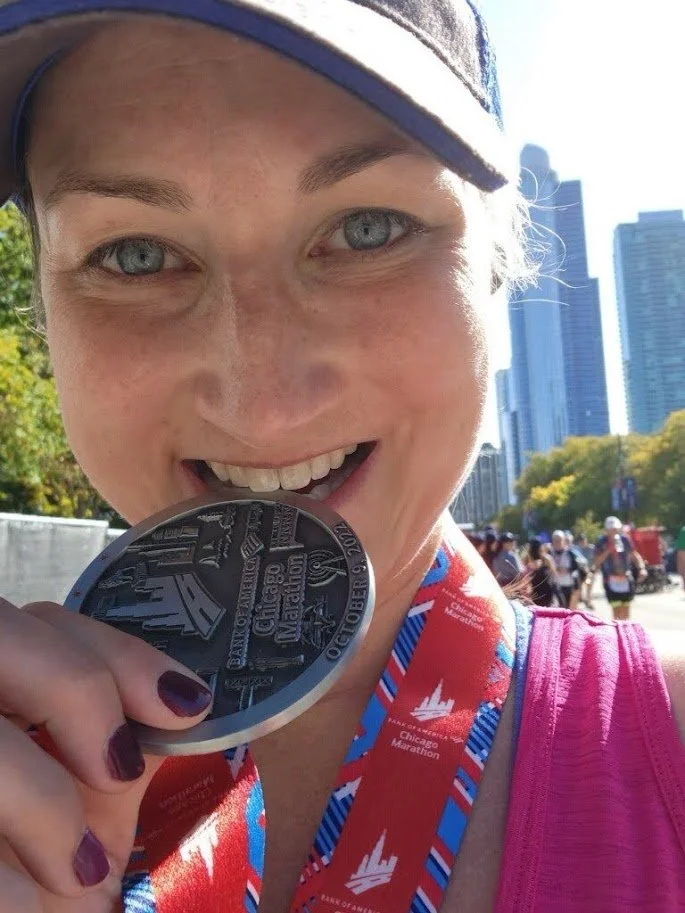
These two baddies are my dad and sister at this year’s Chicago Marathon.
The first time my sister ran one, she didn’t train. She just showed up with the invincible attitude of a 19-year-old and did the thing. My dad’s lost count of his medals and plans to keep collecting them until he’s at least 80.
Old people, young people, professional athletes, runners with disabilities, and people who started with a couch-to-5K plan are out there every year. Many fly in from all over the world, excited by the challenge of running 26.2 miles. And do you know what the completion rate is?
97-99%
How do tens of thousands of people with vastly different levels of fitness and experience finish something this hard?
Training matters at every mile, and I’d never minimize it. But training alone wouldn’t produce a completion rate that high. It’s the course design that makes finishing almost inevitable.
You have a map, roped-off streets, pacers, mile markers, hydration stations, aid stations, (jello shot stations), goo passer outers, hype music, and a throng of the most enthusiastic cheerleaders tracking your progress and yelling positive affirmations as you pass. You are surrounded by people running in the same direction, and you are never alone. Every time your body or your mind starts to betray you, it’s still somehow easier to keep going than it is to quit.
When I ran it several years ago, it didn’t feel inevitable. My knee started screaming at mile eight. (That’s too early for knee pain with more than 18 miles to go, in case you’re wondering.) I was jog-limping the last several miles and had real doubts that I’d finish.
But as hard as it was to keep going, stopping was a ridiculous idea. I had people all around me creating forward momentum. Strangers were cheering me on. The people handing out Gatorade and spraying that magic pain relief stuff were all ahead. My friends and family, my medal, my wallet, the bathroom…all at the finish line. The course was doing its job.
Now compare that to many workplaces.
We expect marathon-level stamina, but people operate with no map, no clarity about who decides what, and no feedback until an annual review, when someone tells them at mile 20 that they took a wrong turn back at mile 4. When people burn out or check out, we tend to question their grit before we question the course design.
Low morale and poor execution are organizational design problems. That’s the heart of my Feedback Fluency framework and my work with teams: building the course so people can do the best work of their lives, even in times of change and challenge.
If your team is running on fumes right now, ask yourself what part of their course is missing.
My dad and sister are already looking forward to next year. That’s what a well-built course does: people keep coming back for the hard thing. And I’ll be out there with thousands of others, holding a sign that says “Just keep going.”